
Water Mitigation Services Explained: What They Are and Why You Need Them Immediately
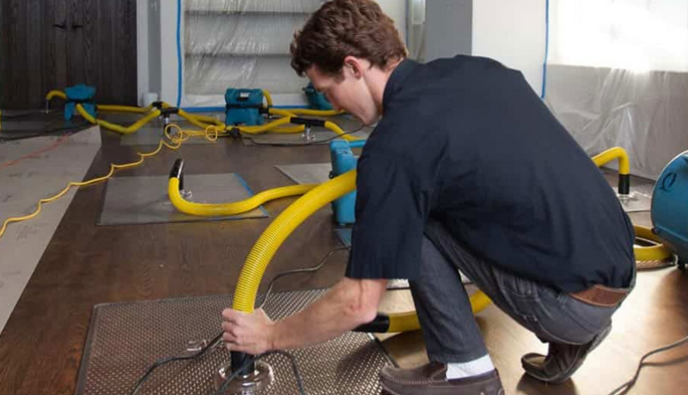
Table of Contents
Water mitigation services are emergency professional services designed to stop water damage from spreading and getting worse after a flood, burst pipe, or leak. The process involves water extraction, structural drying, dehumidification, and sanitization. It always comes before any restoration work and must begin within the first 24 to 48 hours to prevent mold growth and structural failure. If you are dealing with water damage in San Antonio or the surrounding areas, understanding what these services include can save your property and your budget.
What Are Water Mitigation Services?
Water damage does not wait. The moment water enters a building without being controlled, the clock starts ticking against you.
Water mitigation services are the emergency first-response actions that professionals take to stop water damage from spreading and causing secondary harm. Think of it as damage control before any actual repair work begins. A trained water mitigation team arrives at your property, assesses the situation, removes standing water, dries out the structure, and sanitizes affected surfaces.
The word “mitigate” literally means to lessen or reduce the severity of something. In the context of water damage, it means containing the crisis before it grows into a much bigger and more expensive problem.
These services are not optional. They are necessary. And the faster they begin, the better the outcome for your property.
Prime Time Restoration provides professional water mitigation and water damage restoration services in San Antonio and across the surrounding areas; responding to emergencies 24 hours a day, 7 days a week.
Water Mitigation vs. Water Restoration: Know the Difference
One of the most common points of confusion for property owners is the difference between water mitigation and water restoration. They are related, but they are not the same thing.
Water Mitigation is what happens first. It focuses on minimizing the immediate damage; extracting the water, drying out materials, and preventing mold from taking root. It is protective, not restorative.
Water Restoration is what happens after. Once the property is stabilized and dry, restoration focuses on repairing and rebuilding what was damaged; replacing drywall, treating flooring, repainting walls, and returning the space to its original condition.
A helpful way to think about it: mitigation is the emergency room visit, and restoration is the recovery and physical therapy that follows.
Both phases are essential. Skipping mitigation and jumping straight to restoration is like painting over a water stain without fixing the leak. The problem will always come back worse.
You can learn more about the full process in this guide: Water Damage and Restoration: From Flood to Finish.
The 5-Step Water Mitigation Process Explained
Understanding what happens when a mitigation team arrives at your door helps you know what to expect and why each step matters.
Step 1: Inspection and Damage Assessment
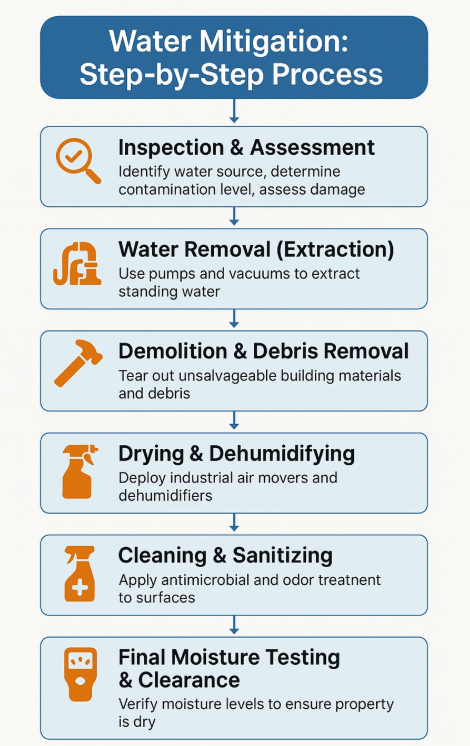
The team arrives and immediately inspects the affected area using specialized tools including infrared cameras and moisture meters. This step identifies hidden water trapped behind walls, under floors, and inside ceilings. Without this, moisture is often missed and leads to mold weeks later.
Step 2: Water Extraction
Using industrial-grade pumps and wet vacuums, the team removes all standing water as quickly as possible. Every minute water sits on porous materials like drywall, wood, and carpet accelerates the damage.
Step 3: Structural Drying and Dehumidification
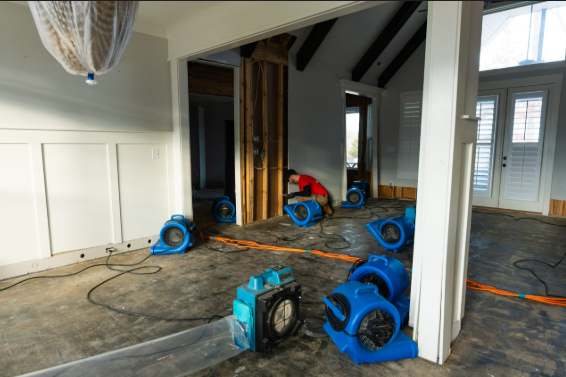
After extraction, air movers and commercial dehumidifiers are placed throughout the space. This phase removes the moisture that remains trapped in walls, floors, and furniture. It can take several days depending on the severity of damage.
Step 4: Cleaning and Sanitization
Water; especially floodwater or sewage-related water; carries bacteria, viruses, and other contaminants. After drying, all affected surfaces are cleaned and treated with professional-grade disinfectants to make the space safe again.
Step 5: Removal of Unsalvageable Materials
Some materials simply cannot be saved. Severely water-logged drywall, saturated insulation, and mold-compromised flooring must be safely removed and disposed of. This creates a clean foundation for the restoration work that follows.
For a deep dive into these steps, read this detailed resource: 5 Steps for Emergency Water Damage Restoration.
Common Causes of Water Damage That Require Mitigation
Water damage can happen to any property at any time. Here are the most frequent triggers:
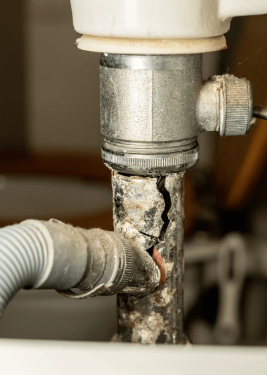
Burst or leaking pipes are among the top causes, especially in older buildings. Even a slow drip inside a wall can cause hidden damage over weeks or months.
Flooding from storms is a serious concern across San Antonio, New Braunfels, and surrounding Texas communities. Heavy rains overwhelm drainage systems and push water into properties from the outside.
Appliance failures such as broken water heaters, washing machine leaks, and dishwasher malfunctions are responsible for a significant number of residential water damage claims each year.
Roof leaks during periods of heavy rain allow water to seep through ceilings and into wall cavities.
HVAC condensation leaks are often overlooked but can cause significant moisture buildup over time, particularly in attic spaces.
Sewage backups are especially dangerous because they introduce category 3 “black water” into the property. This type of contamination requires immediate professional intervention.
No matter the cause, water mitigation services must begin right away. The faster your response, the less damage you will face.
Explore this resource for residential situations: Residential Water Damage Restoration: A Complete Guide.
Why the First 24 Hours Are Critical
This is the section that most property owners wish they had read sooner.
Mold begins to grow within 24 to 48 hours of a water incident. Drywall absorbs water in under a minute. Hardwood floors begin to warp and buckle within hours. Structural integrity of subfloors can be compromised within days.
The longer water sits, the more expensive and complex the recovery becomes. What might cost a few thousand dollars to mitigate on day one could require tens of thousands to restore if left for even 72 hours.
This is why Prime Time Restoration maintains a 90-minute response time for emergency calls. When every minute counts, having a team that moves fast is not just helpful; it is essential.
Learn why round-the-clock availability makes such a critical difference: Why 24/7 Restoration Services Matter.
How Insurance Works With Water Mitigation Services
Navigating an insurance claim during a water emergency is stressful. Most property owners do not know their rights, their coverage, or the steps they need to take to protect their claim.
Here is what you need to know:
Most homeowners’ insurance policies cover sudden and accidental water damage. This includes burst pipes, appliance failures, and HVAC malfunctions. It generally does not cover damage caused by gradual leaks, lack of maintenance, or external flooding (which requires a separate flood policy).
Documentation is everything. Before any cleanup begins, take photos and videos of all affected areas. Record the extent of visible damage.
Professional water mitigation teams help with insurance coordination. A reputable company will document damage thoroughly, work with your adjuster, and in many cases use the same estimating software your insurance company relies on. This reduces delays and disputes in the claims process.
Prime Time Restoration offers dedicated insurance claim assistance across multiple Texas communities, including:
- Insurance Claim Assistance in Buda
- Insurance Claim Assistance in Cibolo
- Insurance Claim Assistance in Hondo
- Insurance Claim Assistance in Houston
- Insurance Claim Assistance in Dallas
- Insurance Claim Assistance in Canyon Lake
- Insurance Claim Assistance in Fair Oaks Ranch
- Insurance Claim Assistance in Boerne
Who Needs Water Mitigation Services in San Antonio?
Water damage does not discriminate. It can affect any type of property.
Hotels and hospitality businesses face enormous losses when water damages guest rooms, lobbies, or commercial kitchens. A swift professional response limits disruption to guests and prevents revenue loss.
Multifamily units and apartment complexes are especially vulnerable because a leak in one unit can quickly travel to units below or beside it, multiplying the scope of damage rapidly.
Hospitals and healthcare facilities must maintain strict hygiene and safety standards at all times. Water intrusion in a healthcare environment requires immediate professional handling to protect patients and staff.
Residential homeowners across San Antonio, Schertz, Seguin, Universal City, Kyle, New Braunfels, and beyond need fast, qualified water mitigation services after any water emergency.
Prime Time Restoration is a trusted water damage restoration company serving San Antonio and covers a wide service area that includes Austin, Boerne, Buda, Canyon Lake, Cibolo, Converse, Dallas, Fair Oaks Ranch, Hondo, Houston, Kyle, Leon Valley, Live Oak, New Braunfels, San Marcos, Schertz, Seguin, Selma, Spring Branch, Timberwood Park, and Universal City.
Connect with the team on Instagram, Facebook, and LinkedIn to stay updated on restoration tips and emergency preparedness.
How to Choose the Right Water Mitigation Company
When disaster strikes, most property owners do a quick Google search and call whoever appears first. But choosing the wrong team can make a difficult situation much worse.
Here are the key factors that matter:
Response time. A company that takes four hours to arrive during a water emergency is not truly helpful. Look for a team that guarantees a rapid response; Prime Time offers a 90-minute window.
Certifications and training. Ask whether the team is IICRC-certified (Institute of Inspection, Cleaning and Restoration Certification). This is the industry gold standard.
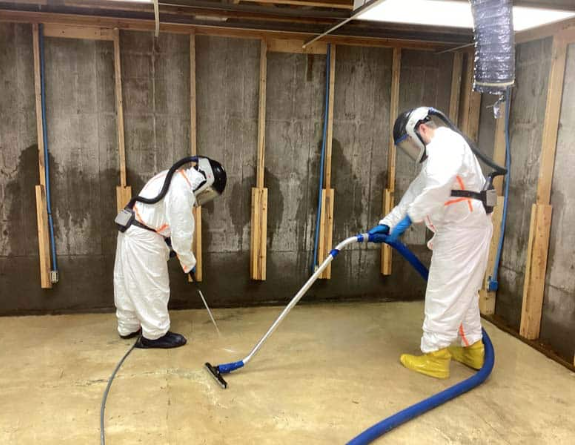
Equipment quality. Professional mitigation requires commercial-grade dehumidifiers, air movers, moisture meters, and infrared cameras. A team without the right tools cannot do the job correctly.
Insurance coordination experience. A good mitigation company understands how to work with adjusters and document damage in a way that supports your claim.
Local knowledge. A company that knows the Texas climate, local building codes, and the specific challenges of San Antonio-area properties will always outperform an out-of-state franchise with no local roots.
You can also browse verified testimonials from Prime Time’s past clients to see the results for yourself.
If you need to locate water mitigation services near you quickly, these resources can help:
- Water Damage Cleanup Near Me
- Water Damage Repair Near Me
- Water Restoration Company Near Me
- Water Damage Restoration Services Near Me
- Flood Damage Restoration Near Me
Conclusion
Water damage is unpredictable, but your response to it does not have to be.
Understanding what water mitigation services are, why timing is everything, and how to choose a qualified team puts you in a far stronger position when an emergency happens. The difference between acting within the first hour and waiting until the next morning can mean the difference between a contained cleanup and a months-long restoration project.
Prime Time Restoration is available 24/7 and reaches properties across San Antonio and the surrounding communities within 90 minutes of your call. The team handles everything from water extraction and structural drying to insurance documentation and full coordination; so you do not have to manage it alone.
So here is the question we leave you with: If a pipe burst in your building tonight, do you have a restoration company’s number saved and ready to call?
If the answer is no, now is the time to change that.
Address: 11495 Topperwein Road, San Antonio, TX 78233

Leave a Reply
Want to join the discussion?Feel free to contribute!