Water Damage Cleanup Near Me: 5 Proven Steps That Save Your Floors, Walls & Belongings
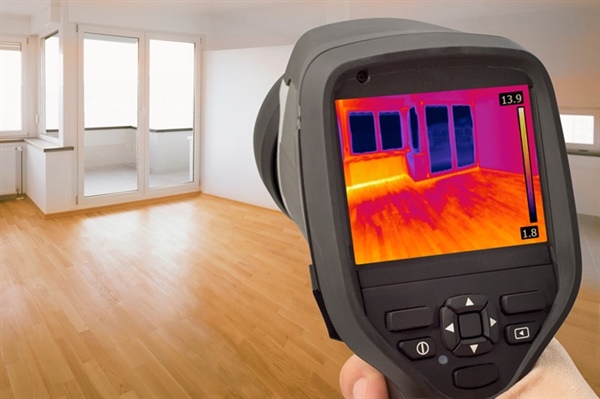
Table of Contents
What Does Water Damage Cleanup Involve?
Water damage cleanup near me refers to professional emergency services that extract standing water, dry affected structures, prevent mold growth, salvage personal belongings, and restore a property to its pre-damage condition. Done correctly by certified technicians, the process covers far more than mopping floors; it includes moisture detection inside walls, anti-microbial treatment, content restoration, and in severe cases, full structural reconstruction.
Why the Words “Near Me” Matter More Than You Think
When someone types “water damage cleanup near me” into their phone at midnight, they are not browsing options. They are in crisis mode.
Proximity matters because property damage is not static; it is moving. Water travels downward and outward every minute it is left untreated. A flooded second-floor bathroom becomes a ceiling collapse risk for the room below. A soaked basement wall risks structural compromise within hours.
Choosing a restoration company with deep local roots in the San Antonio area means faster boots on the ground. It means a team familiar with the specific weather patterns, soil types, and construction styles of your neighborhood. It also means a company with established relationships with local insurance adjusters; a detail that speeds up claims considerably.
Prime Time Restoration is located at 11495 Topperwein Road, San Antonio, TX 78233. With a 90-minute response commitment across the greater San Antonio region, “near me” is not just a search phrase for Prime Time; it is a service standard.
Browse the complete residential water damage restoration guide for an overview of what full-scope cleanup looks like from start to finish.
Step 1: Emergency Assessment and Water Classification
The first thing a professional water damage cleanup team does upon arrival is not grab a mop. They assess.
Using moisture meters and thermal imaging cameras, they map where the water has traveled; including into wall cavities, beneath flooring, and above drop ceilings. This assessment tells them the true scope of damage, not just the visible surface damage.
Just as important: they classify the water.
There are three recognized categories of water in restoration work:
Category 1 (Clean Water): Water from a supply line, faucet, or rain. Relatively safe but still destructive if not addressed quickly.
Category 2 (Gray Water): Water from appliances like dishwashers or washing machines. Contains some contaminants. Requires personal protective equipment and specific sanitation protocols.
Category 3 (Black Water): Sewage water, floodwater containing debris and biological material, or water that has sat long enough to become contaminated. Requires full hazmat-level remediation. Exposure poses real health risks.
Misclassifying water leads to incomplete cleanup, which leads to ongoing contamination and health hazards. This is one of the most common failures in DIY water cleanup attempts; and one of the strongest arguments for hiring certified professionals when you search water damage cleanup near me.
Step 2: Water Extraction; Removing What You Can See
Once the assessment is complete and the water is classified, extraction begins.
Professional-grade water extraction is nothing like a consumer wet-vac. Restoration companies deploy truck-mounted extraction units capable of pulling hundreds of gallons of water per hour. These machines work significantly faster and more thoroughly than any home equipment; and speed here directly determines how much of your flooring and furnishings can be saved.
During extraction, technicians will:
- Remove standing water from all affected surfaces
- Extract water from saturated carpet and padding
- Use submersible pumps in basement areas with significant accumulation
- Begin moving furniture and personal items to prevent secondary absorption
For properties that have experienced flood events, the process is more intensive. Floodwater from outdoors carries soil, debris, bacteria, and sometimes fuel or chemical runoff; all of which must be thoroughly removed. Read Prime Time’s detailed process for flood damage restoration near me.
Step 3: Structural Drying; Eliminating What You Cannot See
Here is where most DIY attempts fall short; and where the compounding damage begins.
Pulling visible water out of a room is only part of water damage cleanup. The more dangerous problem is moisture that has been absorbed into structural materials: drywall, insulation, subfloor panels, ceiling joists, wall studs, and carpet padding. These materials hold moisture like a sponge even after the visible puddles are gone.
If that absorbed moisture is not removed through controlled drying, the result is mold growth; typically within 24 to 48 hours according to both the EPA and CDC guidance.
Professional structural drying involves:
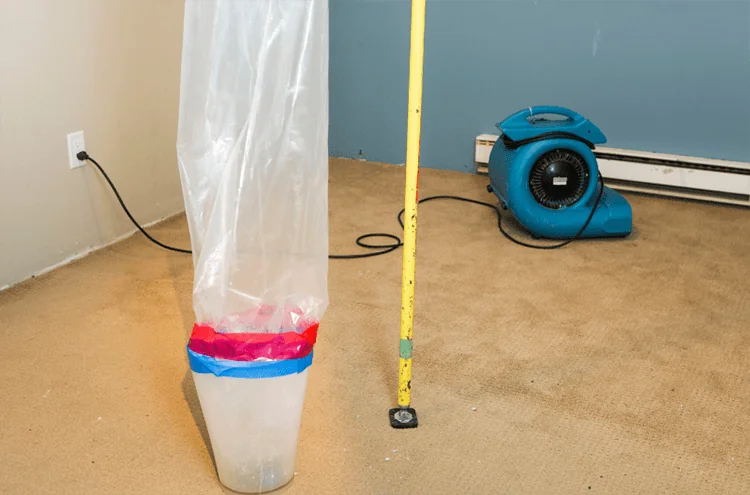
Industrial air movers: High-velocity fans positioned to create airflow patterns that pull moisture out of porous materials and push it into the air.
Commercial-grade dehumidifiers: These machines pull moisture-saturated air out of the room and expel dry air, maintaining conditions that accelerate the drying process.
Drying logs and monitoring: Certified technicians return daily to check moisture readings and adjust equipment placement. Drying is not a “set it and forget it” process; it is actively managed.
This phase often takes 3 to 5 days depending on the extent of saturation. Rushing it; or skipping it entirely; sets the stage for hidden mold that shows up weeks later as a musty smell or black spots behind drywall. For a breakdown of the step-by-step approach Prime Time uses, see water damage repair near me.
Step 4: Mold Prevention and Environmental Treatment
Even when extraction and drying are done well, mold prevention remains an active step in professional water damage cleanup near me service.
After structural drying is confirmed, technicians apply antimicrobial and antifungal treatments to all affected surfaces. This creates a protective barrier that inhibits mold spore activation in any residual moisture that equipment could not fully eliminate.
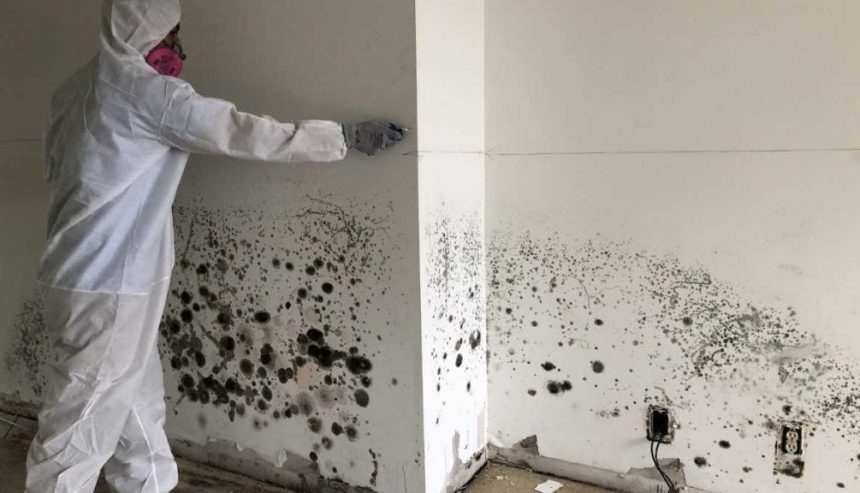
In cases where mold has already begun to form; which can happen even in well-managed cleanups if there was a delay before the crew arrived; professional mold remediation becomes necessary.
Signs that mold remediation is needed alongside your water damage cleanup:
- A musty or earthy odor that persists after drying
- Discoloration; black, green, gray, or white patches on walls, ceilings, or floors
- Health symptoms like persistent coughing, headaches, or eye irritation among occupants
- Visible growth in corners, behind furniture, or under baseboards
Do not try to bleach mold yourself. Bleach does not penetrate porous surfaces where mold roots establish; it only addresses the surface and can actually push spores deeper. Read Prime Time’s guide on mold remediation signs, risks, and professional treatment for a thorough explanation of what proper remediation involves.
Step 5: Restoration and Reconstruction
The final stage of water damage cleanup is the one that often gets overlooked in conversations about emergency response; and it is the stage that actually returns a property to livable condition.
Once everything is dry, treated, and certified clean, damaged materials must be replaced. This often includes:
- Drywall panels that absorbed too much moisture to be saved
- Flooring; especially carpet, hardwood that warped beyond repair, or laminate that swelled and separated
- Insulation that became saturated and compromised
- Baseboards, trim, and paint
- In severe cases; joists, subfloor panels, and even load-bearing elements
Prime Time offers full reconstruction services from start to finish. This matters because having a single contractor handle both the mitigation and the rebuild simplifies insurance coordination, eliminates finger-pointing between multiple vendors, and gets the property back to normal faster.
For commercial properties; whether it is a hotel that needs to re-open rooms or an apartment complex managing displaced tenants; this full-service capability is especially valuable.
What Happens to Floors, Walls, and Belongings Without Fast Action
When someone searches water damage cleanup near me, they usually have a sense of urgency. But it is worth spelling out exactly what is at stake with each hour of delay.
Hardwood floors: Wood expands when it absorbs moisture. Hardwood floors can begin to cup; where edges rise higher than the center of each board; within 24 hours. If drying begins quickly, many floors can be saved. After 48 to 72 hours of sustained moisture, permanent warping often means full replacement.
Laminate and engineered flooring: These materials swell at the seams and lose their locking mechanism. Unlike hardwood, laminate almost never recovers once swollen. Quick extraction can save it; delay almost certainly cannot.
Drywall: Gypsum-based drywall absorbs water rapidly. Once it becomes paper-thin, soft, or begins to crumble, it cannot be dried back to original condition. Replacement is the only path. The surrounding mold risk accelerates this decision.
Personal belongings: Documents, photographs, textiles, and electronics all have narrow windows for salvage. Paper documents can sometimes be freeze-dried if reached within 24 hours. Electronics that are unpowered and dried rapidly can sometimes be recovered. Soft furnishings like mattresses and upholstered furniture rarely survive saturation.
Structural elements: Prolonged moisture causes wood studs, rim joists, and subfloor panels to develop rot. Once rot establishes; it compromises the structural integrity of the building and requires full removal and replacement.
A fast call to a water damage cleanup company near you is almost always cheaper than the alternative. See the water restoration company near me page to understand what comprehensive service looks like.
How to Choose a Water Damage Cleanup Company Near You
Not every company offering water damage cleanup near me operates at the same standard. Here is what to look for.
IICRC Certification: The Institute of Inspection, Cleaning and Restoration Certification sets the industry standard. Certified technicians have formal training in water damage restoration protocols, mold remediation, and drying science.
True 24/7 availability: Some companies claim 24/7 service but route calls to an answering service. The difference between a live dispatcher and a voicemail at 3 AM is a few hours; and those hours matter. Prime Time answers live, every hour.
Documented response time: Prime Time commits to 90 minutes. Ask any company you consider what their guaranteed response time is; not their “typical” time.
Insurance assistance: Navigating a water damage claim is stressful on top of an already stressful event. A company that handles documentation, communicates with your adjuster, and helps you understand your coverage options is worth considerably more than one that just does the cleanup. Explore insurance claim support available in areas like Cibolo, Houston, Dallas, and Hondo.
Full-service capability: A company that can handle both mitigation and reconstruction under one roof eliminates the complexity of coordinating multiple vendors during an already chaotic situation.
Serving Your Neighborhood: Prime Time’s Reach Across Central Texas
One of the most practical things to know when searching water damage cleanup near me is whether your address actually falls within a company’s rapid-response zone.
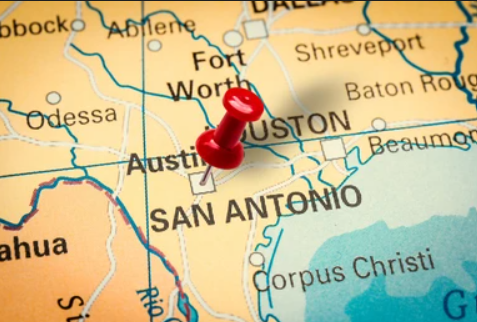
Prime Time Restoration serves: Austin, Boerne, Buda, Canyon Lake, Cibolo, Converse, Dallas, Fair Oaks Ranch, Hondo, Houston, Kyle, Live Oak, Leon Valley, New Braunfels, San Antonio, San Marcos, Schertz, Seguin, Selma, Spring Branch, Timberwood Park, and Universal City.
Each area has specific resources available:
- Water damage restoration in Seguin, Texas
- Water damage restoration services in Universal City, TX
- Fire damage restoration in Leon Valley
- Fire damage restoration in Boerne
- Fire damage restoration in Spring Branch
- Fire damage restoration in Timberwood Park
- Fire damage restoration in Hondo
- Fire damage restoration in Schertz
- Fire damage restoration in Kyle
Insurance, Claims, and Getting Your Costs Covered
One of the most stressful parts of any water damage cleanup situation is not the damage itself; it is the paperwork and back-and-forth with your insurance provider.
Most standard homeowners insurance policies cover sudden and accidental water damage; such as a burst pipe or appliance failure. They typically do not cover gradual leaks that were left unaddressed, or flooding from outdoors unless a separate flood policy is in place.
The key phrase that matters most to insurers is: timely mitigation. Your policy requires that you take reasonable steps to prevent further damage once an incident occurs. This is one more compelling reason to call water damage cleanup professionals immediately rather than waiting to see if things dry out on their own. Delays can actually be used by insurance companies to argue that secondary damage; like mold; was preventable and therefore not covered.
Prime Time assists clients through the entire insurance process, including:
- Thorough on-site damage documentation using photos and moisture logs
- Direct communication with insurance adjusters
- Itemized scopes of work that align with industry-standard estimating software
- Guidance on supplemental claims when initial payouts fall short
Explore location-specific insurance support:
- Insurance claim assistance in Buda
- Insurance assistance in Canyon Lake
- Insurance assistance in Boerne
- Insurance assistance in Fair Oaks Ranch
- Air duct cleaning guide for San Antonio, TX

Conclusion
When water invades your property, your single most important decision is how fast you act; and who you call.
Water damage cleanup near me is not a luxury search. It is an emergency one. The 5-step process outlined in this guide; assessment, extraction, structural drying, mold prevention, and restoration; is not sequential only in theory. It is sequential in time. Each stage builds on the speed and thoroughness of the one before it. Cut corners on extraction, and drying fails. Rush the drying phase, and mold prevention becomes remediation. Skip reconstruction oversight, and structural problems resurface months later.
Prime Time Restoration brings all 5 stages under one roof, with a team available every hour of the day, a guaranteed 90-minute response time, and the insurance support that turns a disaster into a documented, covered, and resolved claim.
Your floors, your walls, and your belongings are worth protecting. So is your peace of mind.
Stop waiting for water damage to get worse on its own. Call Prime Time Restoration at 210-656-3469 right now; because every hour costs more than the call.