
Fire Damage Restoration: A Step-by-Step Guide to Recovering After a House Fire
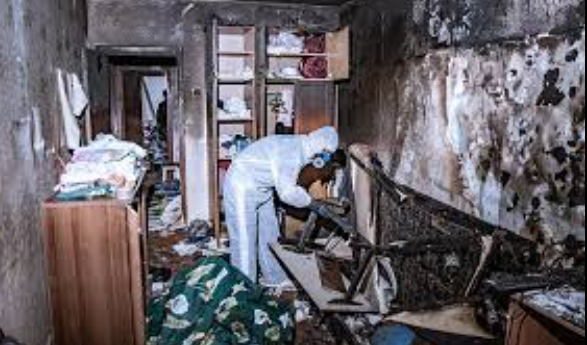
Table of Contents
Fire damage restoration is the professional process of safely removing fire, smoke, and soot damage from a property and returning it to its pre-loss condition. The process typically involves seven key phases: emergency assessment, securing the structure, water and smoke removal, soot cleanup, deodorization, repairs, and final inspection. Starting the process within the first 24 to 72 hours dramatically reduces secondary damage, lowers restoration costs, and protects the health of everyone involved.
What Happens to a Home After a Fire (Beyond the Flames)
Most people think a house fire ends when the firefighters drive away.
It does not.
The real damage often continues long after the flames are extinguished. Smoke particles embed themselves deep into walls, ceilings, insulation, and HVAC ducts. Soot, which is highly acidic, begins corroding metal surfaces, discoloring paint, and degrading fabrics within hours of a fire. Meanwhile, the thousands of gallons of water used to put out the fire create their own secondary crisis: soaked structural materials, saturated drywall, and conditions ripe for mold growth within 24 to 48 hours.
According to the National Fire Protection Association (NFPA), U.S. fire departments respond to a home fire every 88 seconds. And yet, many homeowners have no idea what the fire damage restoration process looks like or how long it takes.
This guide is here to change that.
Whether you have experienced a small kitchen fire or a major blaze, understanding the full fire damage restoration process will help you make confident, informed decisions during one of the most stressful periods of your life.
Why the First 24 Hours Are Critical in Fire Damage Restoration
Speed matters enormously in fire damage restoration.
The longer soot and smoke residue sit on surfaces, the deeper they penetrate. Smoke is deceptively destructive; it travels through HVAC systems, settles inside closets, and seeps into wall cavities far from the original source of the fire. Within just a few hours, soot can permanently stain countertops, yellow walls, and corrode chrome fixtures.
Water damage compounds the problem. If the firefighting water is not extracted promptly, it creates the perfect conditions for mold growth, which the EPA notes can begin in as little as 24 to 48 hours.
Acting fast is not just good advice; it is the difference between a property that can be restored and one that requires far more extensive reconstruction.
This is why Prime Time Restoration offers a 90-minute response time and 24/7 emergency services across San Antonio and surrounding communities. Every minute counts after a fire.

Step 1: Emergency Assessment and Property Securing
The fire damage restoration process begins with a thorough assessment of the property.
A certified restoration professional will walk through the entire structure; not just the burned areas; to document all damage. This includes:
- Identifying structurally compromised areas (weakened floors, sagging ceilings, damaged load-bearing walls)
- Mapping smoke and soot spread throughout the building
- Documenting all damage with photos and detailed reports for your insurance claim
- Assessing air quality for toxic particles and gases
After the assessment, the team will board up windows, doors, and roof openings to secure the property against weather, vandalism, and wildlife. This step also prevents unauthorized access to an unsafe structure.
This documentation phase is essential. It forms the foundation of your insurance claim and ensures no damage goes unaccounted for. Prime Time’s insurance claim assistance is designed to take this burden off your shoulders completely.
Step 2: Water Removal from Firefighting Efforts
One of the most overlooked aspects of fire damage restoration is water removal.
Firefighters can use thousands of gallons of water to extinguish a blaze. That water saturates flooring, seeps into walls, soaks insulation, and pools in basements and crawl spaces. Left unaddressed, this moisture becomes a mold and structural decay problem on top of an already serious fire damage situation.
The water removal phase involves:
- Industrial extraction equipment to remove standing water quickly
- High-powered air movers and dehumidifiers to dry structural materials
- Moisture mapping using thermal cameras to identify hidden wet spots behind walls and under floors
- Antimicrobial treatments to prevent mold growth in saturated areas
This step is closely tied to the full water damage restoration process, and certified technicians treat it with the same urgency as any standalone flood event.
Step 3: Smoke and Soot Removal
This is often the most labor-intensive phase of fire damage restoration.
Smoke and soot do not just sit on the surface; they penetrate porous materials and leave behind acidic residue that continues causing damage even after the fire is out. Without proper removal, that residue will permanently stain walls, corrode metals, and create a pervasive odor that no amount of air freshener can fix.
Professional smoke and soot removal involves:
Dry soot cleaning: Using specialized dry chemical sponges to lift loose soot from surfaces without smearing it further into the material.
Wet cleaning: Applied to surfaces where soot has bonded more deeply, using professional-grade cleaning solutions.
HVAC system cleaning: Smoke travels freely through ductwork. Skipping this step means reintroducing smoke particles into the air every time the system runs. Prime Time’s air duct cleaning service in San Antonio addresses this critical step.
Content cleaning: Personal belongings, furniture, clothing, and documents are cataloged, cleaned, and stored offsite where possible.

Step 4: Deep Cleaning and Deodorization
Even after soot is removed, smoke odor can linger for weeks or even months if not treated at a molecular level.
This is not a cosmetic issue. Smoke odor indicates that microscopic particles are still present in the environment, and those particles can affect air quality and respiratory health. Professional fire damage restoration teams use a combination of methods to eliminate odor at its source:
Thermal fogging: A deodorizing agent is turned into a fog that penetrates the same pathways the smoke traveled, neutralizing odor molecules in hard-to-reach areas.
Ozone treatment: Ozone generators are used in unoccupied spaces to break down odor molecules at a chemical level.
Hydroxyl generators: A safer alternative to ozone that can be used in occupied or semi-occupied structures.
Air scrubbers with HEPA filtration: These continuously filter airborne particles and contaminants during the entire restoration process, protecting the health of both workers and residents.
Proper deodorization is a non-negotiable step in thorough fire damage restoration. Skipping it or treating it superficially will result in odors returning once the property heats up again.
Step 5: Structural Repairs and Reconstruction
Once the property is clean, safe, and dry, the rebuilding begins.
This is where fire damage restoration transitions into full reconstruction services. Depending on the severity of the fire, this phase can range from replacing drywall and repainting to rebuilding entire rooms or structural sections.
Common reconstruction tasks include:
- Replacing fire-damaged framing, studs, and subfloors
- Installing new drywall, insulation, and vapor barriers
- Rebuilding kitchens, bathrooms, and living spaces
- Repairing or replacing roofing and exterior siding
- Restoring electrical and plumbing systems damaged by heat or water
For properties in San Antonio, New Braunfels, Leon Valley, and surrounding areas, Prime Time’s reconstruction team coordinates directly with insurance adjusters to ensure all approved work is completed on schedule. If you are dealing with fire damage in specific areas, these location-specific guides are worth reviewing: fire damage restoration in New Braunfels, fire damage restoration in Leon Valley, and fire damage restoration in Boerne.

Step 6: Contents Restoration
Not everything destroyed in a fire has to be replaced.
Contents restoration is the process of salvaging, cleaning, and restoring personal belongings that were affected by fire, smoke, or water. This includes furniture, clothing, artwork, electronics, important documents, and sentimental items.
Professional restoration technicians use specialized techniques such as:
- Ultrasonic cleaning for hard goods and delicate items
- Ozone chambers for soft goods affected by smoke odor
- Document drying and restoration for papers and photographs
- Pack-out services where items are carefully documented, transported, and stored in climate-controlled facilities during the restoration process
This step not only helps families recover irreplaceable items; it also reduces the total claim cost by maximizing what can be salvaged rather than replaced.
Step 7: Final Inspection and Clearance
The last step in professional fire damage restoration is the final walkthrough and clearance.
Before a property is considered fully restored, certified technicians conduct a comprehensive inspection to ensure:
- All soot and smoke residue has been completely removed
- Air quality meets safe standards (often verified with air quality testing)
- All structural repairs are complete and meet local building codes
- Odor has been fully eliminated; not just masked
- The property is safe for full reoccupancy
At Prime Time, this final inspection is not a formality. It is a commitment to the families and businesses that trusted the team with their most important asset. You can read more about the complete restoration journey at water damage and restoration flood to finish.
How to Work With Your Insurance Company
Navigating an insurance claim after a fire can feel like a second disaster.
Insurance policies are complex, and adjusters have a job to do; which is not always aligned with getting you the maximum payout. Understanding your rights and having professional documentation from a certified restoration company significantly improves your outcome.
Key tips for working with your insurer:
- File your claim immediately; delays can complicate coverage
- Do not throw anything away before documentation is complete
- Keep a detailed log of all communications with your insurer
- Work with a restoration company that provides itemized damage reports
- Ask about Additional Living Expenses (ALE) coverage if your home is uninhabitable
Prime Time offers insurance claim assistance across multiple Texas communities, including Houston, Dallas, Canyon Lake, Hondo, Boerne, and Fair Oaks Ranch.

Who Needs Fire Damage Restoration in San Antonio?
Fire damage restoration is not just for single-family homes.
Prime Time serves a wide range of clients across San Antonio and the surrounding Texas region, including:
- Hotels and hospitality properties where fire damage can affect dozens of guest rooms and common areas simultaneously
- Multifamily units and apartment complexes where a single fire incident can displace multiple families and trigger complex multi-unit restoration projects
- Hospitals and healthcare facilities where fire, smoke, and water damage must be addressed with strict infection control and air quality standards
Beyond San Antonio, Prime Time also serves Austin, Boerne, Buda, Canyon Lake, Cibolo, Converse, Dallas, Fair Oaks Ranch, Hondo, Houston, Kyle, Live Oak, Leon Valley, New Braunfels, Schertz, Seguin, Selma, Spring Branch, Timberwood Park, and Universal City.
Explore location-specific fire damage restoration resources:
- Fire damage restoration in Hondo
- Fire damage restoration in Timberwood Park
- Fire damage restoration in Spring Branch
- Fire damage restoration in Schertz
- Fire damage restoration in Kyle
Conclusion
A house fire is one of the most traumatic events a family or business can experience.
But it is not the end of your story.
With a structured, professional fire damage restoration process led by certified experts, most properties can be brought back to their pre-fire condition; and in some cases, even improved. The key is understanding each step, acting quickly, and partnering with a team that has the experience, equipment, and heart to see you through it.
Prime Time Restoration is available 24 hours a day, 7 days a week, with a 90-minute response time across San Antonio and surrounding Texas communities.
Address: 11495 Topperwein Road, San Antonio, TX 78233
Follow Prime Time on Instagram, Facebook, and LinkedIn for restoration tips, updates, and community resources.
Now, here is a question worth thinking about: If a fire happened in your home or business tonight, do you know exactly who you would call and what steps you would take first?
If the answer is not an immediate yes; bookmark this guide. And keep Prime Time’s number saved: 210-656-3469.