Residential Water Damage Restoration: A Complete Homeowner’s Guide to Recovery

Table of Contents
Residential water damage restoration is the structured process of extracting water, drying structural materials, sanitizing affected areas, and rebuilding damaged sections of a home after water intrusion. It covers damage from burst pipes, roof leaks, appliance failures, and storm flooding. The faster the process begins, the less structural harm, mold growth, and financial loss a homeowner will experience.
Understanding Residential Water Damage Restoration
Water is patient. It does not rush to cause damage; it seeps, saturates, and silently works its way through walls, floors, and foundations until the evidence becomes impossible to ignore. By then, what started as a small leak has become a structural problem with a hefty price tag.
Residential water damage restoration is the complete science and process of returning a water-affected home to its safe, pre-damage condition. It is far more than mopping up a floor. It involves professional assessment, moisture mapping, targeted extraction, controlled drying, antimicrobial treatment, and in many cases, structural reconstruction.
For homeowners in San Antonio, New Braunfels, Kyle, Schertz, and across South Central Texas, understanding this process is not just useful knowledge; it is the kind of information that protects your most valuable asset.
This guide covers everything you need to know about residential water damage restoration: what causes it, what the process looks like, what insurance pays for, and how to choose the right restoration partner.
The Most Common Causes of Home Water Damage in Texas
Before we walk through the restoration process, it helps to understand what typically triggers the need for residential water damage restoration in the first place.
Burst or frozen pipes are a leading cause. While San Antonio temperatures rarely dip low enough to freeze pipes as commonly as in northern states, sudden cold snaps; like those seen in the Winter Storm Uri event of 2021; can cause widespread pipe failures across the region.
Appliance failures account for a significant share of residential claims. A washing machine supply line failure, a refrigerator ice maker leak, or a water heater rupture can release gallons of water in a matter of minutes.
Roof leaks during heavy Texas storms allow water to enter through deteriorated flashing, cracked shingles, or clogged gutters. What looks like a small ceiling stain can represent weeks of ongoing moisture accumulation inside the attic and wall cavities.
HVAC condensate line clogs are a surprisingly frequent culprit in San Antonio, where air conditioning systems run aggressively for much of the year. A blocked drain line overflows into the ceiling and walls around the unit, sometimes going unnoticed for weeks.
Storm and flash flooding affects low-lying neighborhoods and properties with poor drainage around the foundation. San Antonio and surrounding communities like Canyon Lake and Hondo have experienced significant flood events, making this a very real risk for local homeowners.
Understanding the cause matters because it directly affects your insurance coverage, the restoration approach, and the urgency of the response.
The 3 Categories of Water Damage You Must Know
Not all water damage is equal. The IICRC (Institute of Inspection, Cleaning and Restoration Certification) classifies water into three categories based on contamination level. Your restoration team’s approach; and your safety during the process; depends heavily on which category applies.
Category 1 – Clean Water This water originates from a sanitary source: a broken supply line, a malfunctioning appliance, or rainwater entering through a roof before touching contaminated surfaces. Category 1 poses the lowest health risk, though it can degrade into Category 2 within 24 to 48 hours if left untreated.
Category 2 – Gray Water Gray water contains a degree of contamination from biological or chemical sources. It comes from washing machines, dishwashers, aquariums, or overflowing toilets where only clean water is involved. Gray water requires proper safety gear and more thorough sanitization.
Category 3 – Black Water This is the most serious category. Black water includes sewage backups, river flooding, and any water that has been standing long enough to grow significant bacterial contamination. Do not attempt to clean black water yourself; this requires licensed professionals with full protective equipment and EPA-approved products.
This classification system is why it matters to call a water restoration company near you right away; professionals can correctly classify the damage and respond accordingly.
The Complete 6-Phase Residential Water Damage Restoration Process
This is where the real education begins. Understanding what happens during professional restoration helps you ask the right questions, set appropriate expectations, and know whether the company you hired is doing the job correctly.
Phase 1: Inspection and Damage Assessment
The restoration process always begins with a thorough inspection. Certified technicians use thermal imaging cameras and calibrated moisture meters to map every affected area; including places you would never suspect, like inside wall cavities, beneath flooring, and inside ceiling assemblies.
This phase determines the category of water, the class of moisture loss (how much of the material is saturated), and a complete scope of what residential water damage restoration will require.
Phase 2: Water Extraction
Once the scope is defined, water extraction begins using industrial submersible pumps and truck-mounted extraction units. This step removes the bulk of standing water from floors, carpets, and lower wall sections.
Speed matters here. The faster water is extracted, the less time it has to penetrate structural materials, and the more materials can be saved rather than replaced.
Phase 3: Structural Drying
This is the phase that separates professional residential water damage restoration from amateur cleanup. After visible water is removed, moisture remains hidden inside porous materials like drywall, wood framing, insulation, and concrete.
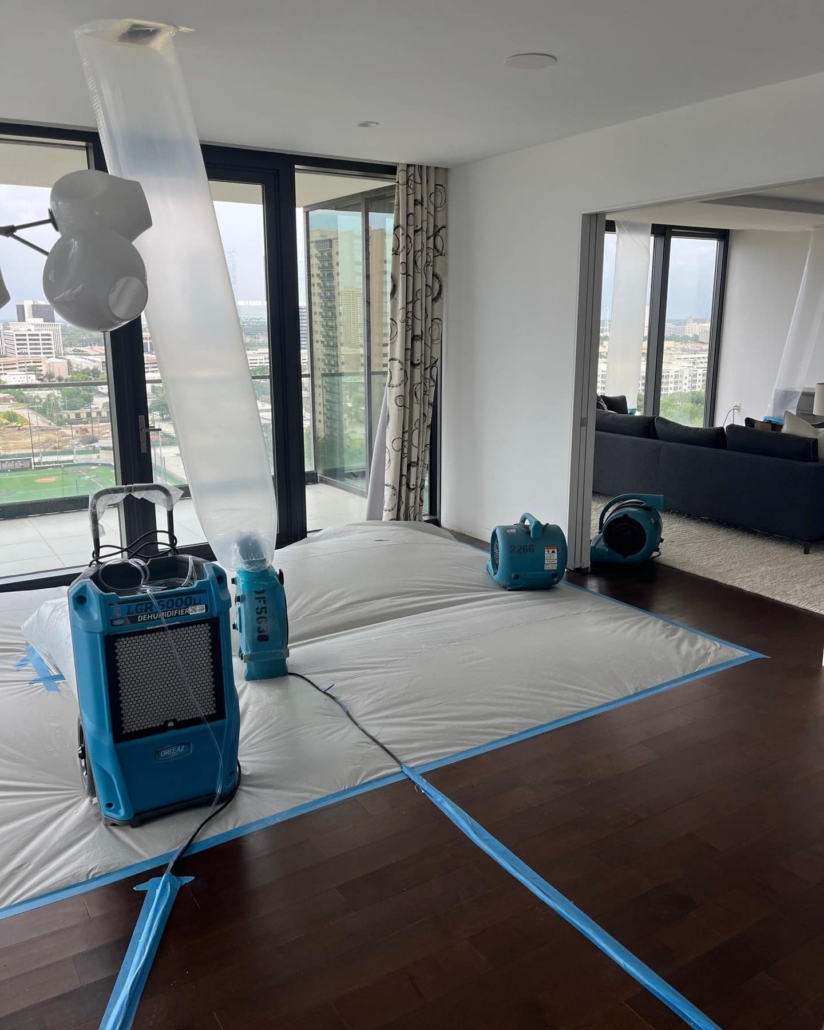
Industrial dehumidifiers pull water vapor from the air while high-velocity air movers direct airflow against wet surfaces to accelerate evaporation. Technicians monitor moisture readings daily, adjusting equipment placement to ensure complete and even drying throughout the structure.
This phase typically takes 3 to 5 days. Rushing it is a costly mistake; incomplete drying is the leading cause of post-restoration mold problems.
Phase 4: Cleaning and Sanitizing
Once the structure is dry, all affected surfaces receive a thorough cleaning and antimicrobial treatment. This step eliminates bacteria, neutralizes odors, and prevents mold from establishing a foothold in freshly dried materials.
In cases involving gray or black water, this phase requires more intensive sanitization and may involve the removal and disposal of contaminated porous materials like insulation and drywall that cannot be effectively cleaned.
Phase 5: Mold Assessment and Remediation
If the residential water damage restoration begins after a delay; or if previous water intrusion was undetected; mold may already be present. A mold assessment is performed after drying to verify that no microbial growth occurred during the moisture window.
If mold is found, licensed remediation services are deployed before any reconstruction begins. In Texas, mold remediation contractors must hold a license from the Texas Department of Licensing and Regulation (TDLR).
Prime Time Restoration offers commercial mold remediation services alongside their water damage work; meaning you do not have to coordinate multiple contractors if both issues are present.
Phase 6: Reconstruction and Restoration
The final phase of residential water damage restoration is rebuilding what was damaged or removed. This may include replacing drywall, installing new flooring, repainting walls, repairing trim, and in more severe cases, addressing structural framing, roof elements, or foundation drainage.
Prime Time Restoration provides full reconstruction services; which means homeowners never have to manage the handoff between a restoration crew and a separate general contractor. The same team that dried your home rebuilds it.
To see how this process plays out in specific communities, explore Prime Time’s guides for water damage restoration in Seguin, Texas and water damage restoration services in Universal City.
How Long Does Residential Restoration Take?
One of the most common questions homeowners ask is how long the process takes. The honest answer is that it depends.
Minor water damage from a contained appliance leak in a single room might be fully resolved in 5 to 7 days. Moderate damage affecting multiple rooms, with some material removal and drying required, typically takes 1 to 2 weeks. Extensive damage involving structural repairs, mold remediation, and reconstruction can take 3 to 6 weeks or longer.
The timeline is also influenced by how quickly the process started. Residential water damage restoration that begins within hours of the event consistently results in shorter timelines and lower total costs than restoration that begins 24 hours or more after the damage occurred.
What Your Homeowner’s Insurance Covers (and What It Doesn’t)
Insurance coverage for water damage is one of the most misunderstood topics in home ownership. Here is what you need to know before you file a claim.
Typically covered: Sudden and accidental water damage from burst pipes, appliance failures, accidental overflow, and water damage from firefighting efforts. Most standard homeowner’s policies cover the residential water damage restoration costs in these scenarios.
Typically not covered: Flooding from external sources (rain, rivers, storm surge) requires a separate flood insurance policy through FEMA’s National Flood Insurance Program or a private carrier. Gradual leaks that developed over time due to neglect are also frequently denied; insurers expect homeowners to maintain their property.
What matters most: Documentation. Photographing the damage thoroughly, keeping records of affected belongings, and working with a restoration company that provides standardized moisture logs and detailed invoices makes a significant difference in how quickly and fully your claim is paid.
Prime Time Restoration provides active insurance assistance throughout the process. Their experience working alongside adjusters in communities like Hondo, Canyon Lake, Houston, and Fair Oaks Ranch means homeowners have a knowledgeable advocate in their corner throughout the claims process.

Preventing Future Water Damage in Your Home
The best residential water damage restoration is the one you never need. While not every water event is preventable, a significant number of home water damage claims stem from issues that routine maintenance would have caught.
Inspect supply lines annually. The braided steel supply lines under your sinks and behind your washer have a typical lifespan of 5 to 8 years. Replace them proactively rather than waiting for a failure.
Keep gutters clear. Clogged gutters cause water to overflow toward your foundation, increasing the risk of basement or crawlspace intrusion. Clean them at least twice a year in San Antonio, especially after heavy leaf fall in autumn.
Know where your main shutoff valve is. Every adult in your household should be able to locate and operate the main water shutoff valve within 30 seconds. In an emergency, this knowledge alone can limit damage by hundreds of gallons.
Install water leak detectors. Smart leak sensors placed near high-risk appliances; water heaters, dishwashers, washing machines, and refrigerators; can alert you to moisture before it becomes a flood.
Check your HVAC condensate drain line. Pour a cup of diluted bleach down your AC drain pan quarterly to prevent algae buildup and clogs. In San Antonio’s climate, this is a year-round maintenance task, not a seasonal one.
Prime Time also provides air duct cleaning services in San Antonio that complement overall home maintenance and moisture management.
Residential Restoration for Hotels, Apartments, and Healthcare Properties
Residential water damage restoration principles apply broadly, but certain property types demand a specialized response.
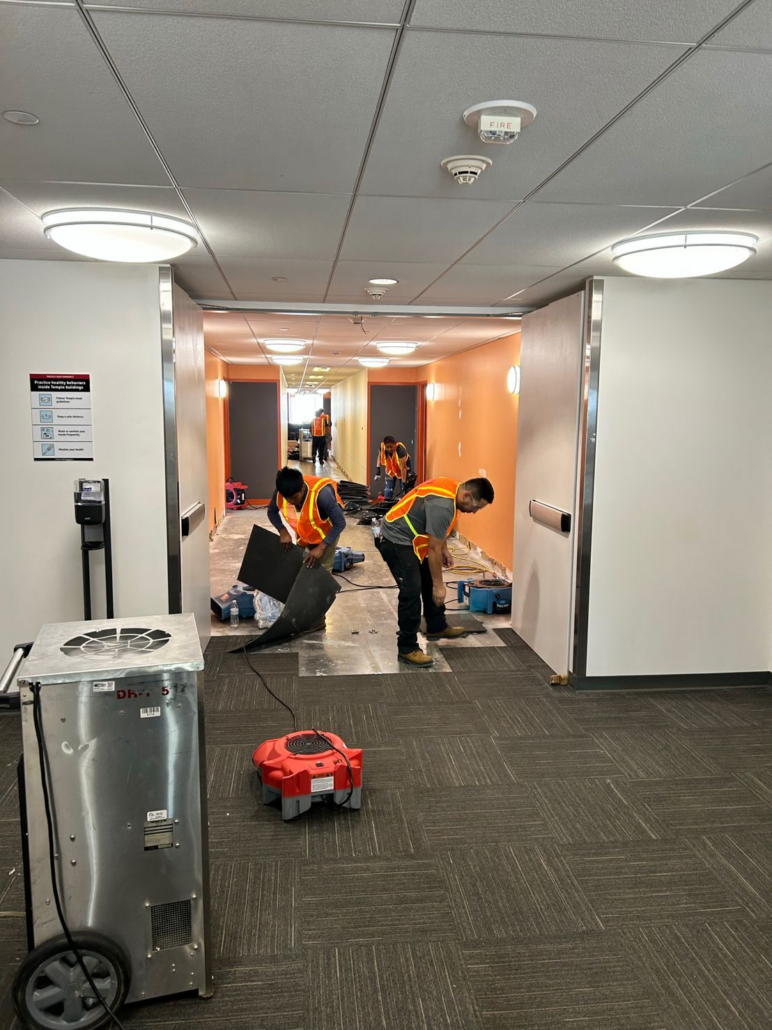
Hotels and hospitality properties operate on tight occupancy schedules. A flooded floor of guest rooms requires not just technical skill but the ability to coordinate around ongoing operations, minimize guest disruption, and meet health department standards for remediation.
Multifamily and apartment complexes face the compounding challenge of shared structures. A Category 2 water event in one third-floor unit can affect two or more units below it simultaneously. Property managers need a restoration partner with the capacity and coordination ability to handle multi-unit responses without cutting corners.
Hospitals and healthcare facilities sit at the highest end of the sensitivity spectrum. Any water intrusion in a clinical environment must be remediated under infection control protocols; partial or poorly managed restoration in a healthcare setting can create dangerous conditions for vulnerable patients.
Prime Time Restoration serves all three property types across its full service area, bringing the same 90-minute response standard and professional-grade approach to every residential and commercial water damage restoration call.
Why San Antonio Homeowners Trust Prime Time Restoration
There is no shortage of restoration companies in the San Antonio market. What distinguishes Prime Time Restoration is a combination of speed, scope, and accountability that homeowners notice from the very first call.
Their 90-minute response time means technicians arrive while damage is still active; before moisture has had time to migrate through walls or floors in full. Their certified team handles the complete scope of residential water damage restoration: extraction, drying, sanitizing, mold assessment, insurance documentation, and full reconstruction.
They serve a wide footprint; from water damage repair near you in the immediate San Antonio area to communities like Boerne, Buda, Selma, Spring Branch, Timberwood Park, and Austin.
Read verified client experiences on their testimonials page, or connect with their community on Instagram and Facebook for real restoration stories.
For fire-related damage; which often occurs alongside water damage from sprinkler systems or firefighting efforts; Prime Time also provides fire damage restoration services in Boerne, Leon Valley, and New Braunfels.
Connect with Prime Time on LinkedIn for industry insights, team updates, and restoration tips.
Conclusion
Residential water damage restoration is a process that rewards preparation, speed, and the right professional partner. The more you understand about how it works; from water categories to structural drying to insurance documentation; the better positioned you are to protect your home and your finances when water damage strikes.
You now know what causes it, what the 6-phase restoration process involves, how long it takes, what insurance typically covers, and how to prevent future damage from occurring.
Your home is not just a structure. It is where your family lives, grows, and finds safety. Protecting it from water damage starts with knowledge; and it continues with having the right team on speed dial.
Do not wait until water is already flowing to make a plan. Call Prime Time Restoration today at 210-656-3469, visit their contact page, or explore their water damage restoration services near you to learn how they can protect your most important investment before, during, and after a water emergency.
Address: 11495 Topperwein Road, San Antonio, TX 78233