Flood Damage Restoration Near Me: What Happens If You Wait Too Long; 5 Costly Consequences You Cannot Afford to Ignore
Table of Contents
Flood damage restoration near me must begin within the first hour of a flooding event if you want to give your property its best chance of full recovery. Every hour of delay triggers a chain reaction: mold begins forming, structural materials absorb beyond the point of drying, personal belongings pass the threshold of salvageability, insurance claims become harder to defend, and health risks multiply inside the affected space.
This article is built around science, not sales. It explains the biology of mold growth, the mechanics of structural water absorption, the chemistry of floodwater contamination, and the specific standards that govern professional flood restoration; so that you can understand exactly what is happening to a flooded property at every stage, and make informed decisions when it matters most.
Why Flood Damage Is a Race Against Time; Not Just Water
Most people understand flooding as a water problem. The more accurate way to understand it is as a time problem.
The water itself; while immediately destructive; is only the beginning of what happens to a property after a flood event. The deeper and more costly damage is caused not by the initial intrusion, but by what water sets in motion inside building materials, air quality, and biological systems when professional intervention does not arrive quickly enough.
Restoration science refers to this as secondary damage; every form of harm that occurs not because of the flood itself, but because of the hours and days that passed before a certified response team arrived. Secondary damage is what turns a $5,000 restoration job into a $40,000 reconstruction project. It is what transforms a manageable water event into a mold remediation emergency. It is what changes a straightforward insurance claim into a disputed negotiation.
Understanding secondary damage; what causes it, how fast it develops, and what stops it; is the most valuable knowledge a property owner can have before a flood event ever occurs. The five consequences below each represent a specific form of secondary damage, explained through the science that drives it.
Consequence 1: The Biology of Mold; Why 48 Hours Is the Critical Window
Mold is one of the most misunderstood organisms in the context of property damage. Most homeowners think of it as something that appears weeks after a flood; a visible sign of neglect that shows up in corners and behind walls if a space is left wet for too long. In reality, mold colonization begins far sooner than most people realize; and understanding the biology behind it explains exactly why flood damage restoration near me cannot wait.
Mold spores are present in virtually every indoor environment on earth at background concentration levels that pose no health risk under normal conditions. They exist in the air you breathe right now without any consequence; because they require two specific conditions to transition from dormant spores into an active, growing colony: moisture and an organic food source. Standard indoor air provides neither in sufficient quantity. Floodwater provides both simultaneously and abundantly.
When floodwater saturates drywall, wood framing, insulation, carpet padding, or subfloor materials, it delivers moisture into the interior of those materials where it is trapped and cannot evaporate naturally. The organic content of those same materials; the cellulose in drywall paper, the lignin in wood, the fibers in carpet; becomes the food source mold needs. Under these combined conditions, mold spores that land on a saturated surface can begin germinating within 24 to 48 hours.
What makes this particularly challenging from a restoration standpoint is that germination and early colony formation are entirely invisible. There is no discoloration, no odor, and no visible growth during the first 24 to 48 hours of colonization. By the time visible mold appears on a surface; which typically happens between 72 hours and two weeks after the initial saturation depending on temperature and humidity; the colony structure inside the material has already been established for days.
This biological reality has a direct and significant financial implication. A wall section treated with professional drying equipment and EPA-registered antimicrobials within the first 24 to 48 hours can typically be restored without removal. That same wall section, if left untreated past the 48-hour mark, may require complete tear-out; the drywall removed, the framing inspected, the insulation discarded, and the entire assembly rebuilt from scratch. The biological process that separates those two outcomes runs on a timeline measured in hours, not weeks.
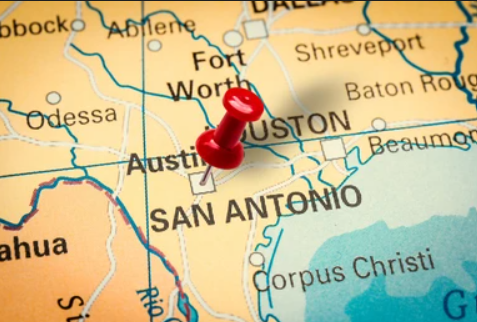
Temperature accelerates this timeline significantly. In San Antonio and surrounding Texas communities, where summer temperatures regularly drive indoor humidity higher than in cooler climates, the mold germination window can compress to as little as 12 to 18 hours in an unventilated, flooded space. This regional factor makes the urgency of flood damage restoration near me even more acute for Texas property owners than it might be for those in drier or cooler climates.
Professional drying equipment; specifically commercial-grade dehumidifiers that remove moisture from the air at rates far beyond what consumer units can achieve; interrupts the germination process by dropping the relative humidity inside affected materials below the threshold mold requires to grow. This is why equipment specifications matter so much in evaluating any flood damage restoration near me provider, and why the distinction between commercial and residential drying equipment has real, measurable consequences for your property.
Consequence 2: How Water Destroys a Building’s Structure From the Inside Out
To understand how flooding damages a building’s structure, it helps to first understand what building materials are made of and how they respond to prolonged moisture exposure. Most residential and commercial construction uses materials that are either inherently porous, organically derived, or both; and virtually all of them react to sustained water contact in ways that compromise their load-bearing capacity, dimensional stability, and long-term integrity.
Wood is the most instructive example because it is foundational to the majority of structures in the United States. Wood is a hygroscopic material; meaning it naturally absorbs and releases moisture from the surrounding environment to reach equilibrium with ambient humidity levels. Under normal indoor conditions, structural wood maintains a moisture content between 6 and 12 percent; a range at which it retains its design strength and remains dimensionally stable. When wood is saturated by floodwater, its moisture content can rise to 30, 40, or even 60 percent; far beyond its fiber saturation point and well into the range where physical and chemical deterioration begins.
At elevated moisture content, wood swells across its grain; a directional expansion that puts enormous pressure on adjacent structural elements. Door frames go out of square. Floor joists push against the subfloor above them. Wall framing exerts lateral force on window openings and exterior sheathing. None of these symptoms are immediately visible to a homeowner walking through a flooded space; but each of them represents a structural compromise that compounds with every additional hour of saturation.
Drywall behaves differently but is equally vulnerable. Standard drywall is composed of a gypsum plaster core sandwiched between two layers of paper facing. Gypsum itself is moderately water-resistant, but the paper facing is not; and it is that paper layer that mold colonizes first and most aggressively. More critically, the gypsum core loses significant compressive strength when saturated; becoming brittle and prone to crumbling. A drywall panel that has been saturated for more than 24 hours has typically absorbed enough moisture that restoration without removal is no longer structurally sound, even if the surface appears relatively intact.
Subfloor materials represent one of the most commonly underestimated areas of structural flood damage. Most modern residential subfloors use oriented strand board or plywood; composite materials that are manufactured using wood fibers and adhesive resins. These materials absorb water rapidly and, once saturated beyond a certain threshold, undergo delamination; the separation of the bonded layers that gives the material its structural integrity. A subfloor that delaminates must be replaced in its entirety; not dried, not treated, and not salvaged. The window between saturation and delamination is shorter than most homeowners assume; often falling within 24 to 48 hours depending on the material grade and the depth of flooding.
Masonry structures present a different pattern of vulnerability. Brick, concrete block, and stone are individually resistant to water damage, but the mortar joints that hold them together are not. Repeated cycles of saturation and drying cause mortar to expand and contract at a different rate than the masonry units themselves; a process called spalling that gradually erodes joint integrity and allows water to penetrate more deeply into the wall assembly with each subsequent exposure. In a single flood event, this cycle may begin within the first 24 hours if water is allowed to stand against masonry walls for extended periods.
Prime Time’s water damage repair services are specifically designed to intervene before structural materials cross from restorable to replaceable; using commercial extraction, precision drying, and daily moisture monitoring to protect the structural integrity of your property from the moment the team arrives.
Consequence 3: The Science of Material Saturation and Why Belongings Become Unsalvageable
Every material inside a flooded property responds to water contact according to its own physical and chemical properties; and understanding those responses helps explain why the salvageability of your belongings declines so rapidly with each hour that professional flood damage restoration near me is delayed.
Upholstered furniture is among the most immediately vulnerable. The foam and batting materials used in cushions and seat backs are open-cell structures; meaning water enters them rapidly and is retained deep within the material where it cannot evaporate without mechanical drying intervention. Once mold germination begins inside a foam cushion; which can happen within 24 to 48 hours as described above; the density and inaccessibility of the foam interior makes full decontamination practically impossible without industrial-grade equipment. Most upholstered furniture that has been submerged for more than 24 to 48 hours is assessed as a total loss during professional content triage; not arbitrarily, but because the cost and likelihood of successful decontamination does not justify the attempt.
Pressed wood and engineered wood products; which include the particle board and medium-density fiberboard used in most modern cabinetry, shelving, and furniture; behave very differently from solid wood when exposed to floodwater. These materials are manufactured by bonding wood particles or fibers together using urea-formaldehyde or similar resin adhesives under heat and pressure. When saturated, the adhesive bond breaks down and the individual particles absorb water and expand; a process called swelling that is both rapid and irreversible. Unlike solid wood, which can sometimes be dried and stabilized if intervention is timely, engineered wood products that have swollen from water absorption do not return to their original dimensions or structural integrity upon drying. The damage is permanent from the moment it begins.
Electronics require a more nuanced explanation because the failure mode is not always immediate or visible. When electronic components are exposed to water, the primary risk is not the initial contact but the corrosion that follows. Water; particularly floodwater containing dissolved minerals, salts, and contaminants; leaves behind residue on circuit boards and internal components as it evaporates. This residue is conductive and hygroscopic; meaning it continues to absorb ambient moisture and create low-level electrical pathways between components that should be isolated from each other. This is what causes electronics to fail weeks or months after a flood event; not the original water contact, but the ongoing corrosion enabled by residue that was never professionally removed.
Paper documents and photographic prints are among the most time-critical items in any flood damage scenario. Paper begins absorbing water immediately upon contact and becomes structurally fragile within minutes; making any handling without professional guidance risky. Photographic emulsions begin to separate from their backing within hours of saturation. The window for professional document and photograph recovery is typically measured in the first two to six hours; after which permanent staining, physical degradation, and mold colonization of paper fibers dramatically reduce recovery success rates. Freeze-drying; a specialized recovery technique used by professional conservators; can extend this window somewhat, but it requires intervention before mold has begun to actively grow on the paper surface.

Consequence 4: How Delayed Action Damages Your Insurance Claim
Insurance policy language around flood and water damage events contains nuances that most policyholders are completely unaware of until a claim is underway; and some of those nuances directly penalize homeowners who delayed seeking professional flood damage restoration near me after an event occurred.
The most significant of these is the duty to mitigate; a clause present in the vast majority of homeowner, renter, and commercial property insurance policies. The duty to mitigate requires the policyholder to take all reasonable steps to prevent additional damage from occurring after a covered loss event. The practical interpretation of this clause, as applied by insurance adjusters, is that a policyholder who did not promptly contact a professional restoration company may have failed in their duty to mitigate; and that failure can be used to reduce the insurer’s liability for damage that occurred or worsened after the initial event.
This matters enormously in flood damage scenarios because the secondary damage described throughout this article; mold growth, structural deterioration, material delamination; is precisely the type of progressive damage that adjusters evaluate when determining whether a policyholder fulfilled their mitigation obligation. If an adjuster visits a flooded property and finds mold colonies already established inside wall cavities, they are within their rights under most policies to attribute a portion of the total damage to delayed response rather than to the original flood event. That attribution translates directly into a reduced claim payout.
The documentation standard that professional restoration companies follow is specifically designed to address this issue. IICRC-certified teams create timestamped records of every phase of their response; initial moisture readings, extraction volumes, equipment deployment logs, daily drying progress reports, and final clearance readings. This documentation creates an evidence-based timeline that demonstrates the policyholder’s immediate and appropriate response to the flood event; making it significantly harder for an adjuster to argue that secondary damage resulted from mitigation failure rather than from the original loss.
Understanding what is and is not typically covered under standard homeowner policies is also important context for evaluating flood damage scenarios. Standard homeowner insurance policies in the United States do not cover damage caused by surface flooding from external water sources; including storm surge, river overflow, or neighborhood drainage failure. This coverage requires a separate flood insurance policy, most commonly issued through the National Flood Insurance Program (NFIP) administered by FEMA. Water damage resulting from internal sources; burst pipes, appliance failures, roof leaks; is generally covered under standard homeowner policies, subject to the mitigation and reporting requirements described above.
Flood insurance policies also carry their own documentation requirements and waiting periods that affect how and when a claim can be filed. NFIP policies, for example, typically require a proof of loss statement to be submitted within 60 days of the flood event; and the documentation generated by a professional restoration team is the primary basis for establishing that proof of loss in a form that meets the program’s evidentiary standards. Property owners who attempt to self-document a flood event without professional restoration support frequently discover that their documentation does not meet the specificity required by their insurer; resulting in delayed, reduced, or denied claims that a professional restoration process would have supported fully.
Consequence 5: The Public Health Threat Hidden Inside Floodwater
Floodwater occupies a different risk category than any other form of water damage; and understanding why requires knowing something about how water is classified in restoration science and what those classifications mean for the health of anyone inside an affected building.
The IICRC’s Standard and Reference Guide for Professional Water Damage Restoration classifies water into three categories based on contamination level. Category 1 water originates from a sanitary source such as a supply line or clean rainwater collection and poses minimal health risk. Category 2 water; called grey water; contains significant contamination from sources such as washing machines, dishwashers, or toilet overflow without feces and may cause illness upon ingestion or skin contact. Category 3 water; called black water; is grossly contaminated and contains pathogenic agents; meaning disease-causing bacteria, viruses, and fungi that pose direct health risks through contact, inhalation, or ingestion.
The critical piece of information for anyone dealing with flood damage is this: virtually all floodwater that originates from external sources; storm surge, river or creek overflow, municipal drainage backup, or neighborhood surface flooding; is classified as Category 3 regardless of its appearance. Clear, clean-looking floodwater that entered your home through a storm drain or rising groundwater is still Category 3 because of what those water sources have passed through before reaching your property. Agricultural runoff carries pesticides, herbicides, and fertilizer compounds. Urban runoff carries heavy metals, petroleum products, and industrial chemicals. Any contact with compromised sewer infrastructure introduces fecal coliform bacteria, E. coli, Salmonella, and a range of enteric viruses into the water supply.
The health implications of Category 3 floodwater extend beyond the initial exposure. As floodwater recedes or evaporates from porous materials, the contaminants it carried do not disappear; they are deposited into the surface and interior of every porous material the water contacted. Carpet fibers, drywall, wood framing, and insulation all retain bacterial and chemical contamination that cannot be removed by drying alone. These residual contaminants become aerosolized as materials dry; meaning they enter the air inside the building and are inhaled by anyone occupying the space.
The respiratory risks associated with occupying or spending time in a building that has experienced Category 3 flooding without professional remediation include exposure to airborne mold spores, bacterial aerosols, and volatile organic compounds released by contaminated materials as they dry.
These exposures accumulate gradually and often produce symptoms; persistent cough, eye and throat irritation, skin rashes, gastrointestinal illness; that may not be immediately connected to the flood event by the people experiencing them. Children, elderly individuals, pregnant women, and immunocompromised persons are disproportionately affected by these exposures and face higher risk of serious illness.
Professional flood damage restoration near me addresses this contamination risk through a specific sequence of steps that go beyond simply drying the affected space. Category 3 materials that cannot be fully decontaminated; particularly porous materials like drywall insulation and carpet padding; are removed and disposed of according to EPA guidelines rather than dried in place. All surfaces that can be retained are treated with EPA-registered antimicrobial products applied at concentrations designed to achieve effective kill rates against the specific organisms found in Category 3 water. Air quality testing during and after the drying process confirms that aerosolized contaminants have been reduced to safe levels before the space is cleared for occupation.
Prime Time’s air duct cleaning and indoor air quality services are frequently incorporated into post-flood restoration protocols for precisely this reason; because the HVAC system acts as a distribution network for whatever contaminants are in the air, spreading mold spores and bacterial aerosols from affected areas into parts of the building that never had direct water contact. Addressing the ductwork is not an optional add-on to a proper flood restoration response; it is a necessary part of ensuring the building is genuinely safe for occupation after a Category 3 event.
What IICRC Standards Say About Proper Flood Damage Restoration
The IICRC S500 Standard and Reference Guide for Professional Water Damage Restoration is the primary technical document governing how flood damage restoration near me should be conducted by any certified provider. Understanding what this standard requires; even at a general level; gives property owners a meaningful framework for evaluating whether the company they are considering is operating at a professional standard or cutting corners.
The S500 standard establishes drying goals in terms of equilibrium moisture content; the moisture level at which a material is in balance with the surrounding air and is no longer at risk for mold colonization or structural deterioration. These goals are not arbitrary targets; they are derived from the moisture requirements of the mold species most commonly found in water-damaged buildings and from the structural thresholds below which building materials retain their load-bearing and dimensional properties.
The standard also establishes that moisture readings must be taken and recorded at multiple points throughout the drying process; not just at the beginning and end. This requirement exists because moisture migration inside building materials is not linear or predictable; a wall cavity that reads dry at the surface may still contain elevated moisture at depth that will eventually migrate outward and restart the mold risk cycle. Daily monitoring with properly calibrated equipment is the only way to confirm that drying is genuinely progressing toward the target goal throughout the entire material depth.
Psychrometric principles; the science of air temperature, relative humidity, and dew point; govern the placement and operation of drying equipment under the S500 standard. The goal is to create a drying environment inside the affected space where the air is warm enough and dry enough to draw moisture out of building materials and carry it to the dehumidifier for removal. Achieving this environment requires calculating the volume of the affected space, the estimated moisture load, and the appropriate equipment capacity; a process that requires training and experience, not intuition.
The S500 standard also addresses the documentation requirements that legitimate restoration companies are expected to maintain; daily psychrometric readings, equipment placement diagrams, moisture mapping records, and material assessment notes. This documentation trail serves both as a quality control mechanism for the restoration team and as an evidence base for the property owner’s insurance claim. Any flood damage restoration near me provider that cannot describe how they document the drying process in detail is not operating to IICRC standards.
How to Evaluate Any Flood Damage Restoration Near Me Provider
Knowing what standards govern proper flood restoration makes it considerably easier to evaluate any company you are considering calling. The following criteria are directly derived from IICRC certification requirements and industry best practices; and they give you a concrete checklist for separating genuinely qualified providers from those who are not.
Ask whether the technicians who will actually be on-site hold individual IICRC Water Damage Restoration (WRT) certification; not just whether the company as an entity claims certification. The IICRC certifies individual technicians, and the quality of a restoration response depends entirely on the training and knowledge of the people physically doing the work.
Ask how they classify water category and what that classification means for their protocol. A technician who cannot explain the three water categories and describe how their approach changes based on category classification is not operating at a professional standard.
Ask what drying documentation they provide and in what format. The answer should include daily moisture readings, psychrometric logs, equipment placement records, and a final clearance report confirming that drying goals have been reached. If the answer is vague, incomplete, or limited to a single report at project completion, that is a meaningful red flag.
Ask about their equipment specifications; specifically the dehumidifier grain removal capacity for the square footage of your affected space. Commercial-grade dehumidifiers are rated by how many grains of moisture per pound of air they can remove per hour; and a properly scoped restoration job requires matching equipment capacity to the moisture load of the specific project. A company that cannot speak to this level of technical detail is likely not using a systematic, engineered approach to drying.
For community-specific flood and water damage restoration resources, Prime Time has developed detailed guides covering areas across the region; including Schertz, Kyle, Timberwood Park, and Spring Branch. Regional resources are also available for Leon Valley, Boerne, and Hondo.
Prime Time Restoration operates from 11495 Topperwein Road, San Antonio, TX 78233 and serves Austin, Boerne, Buda, Canyon Lake, Cibolo, Converse, Dallas, Fair Oaks Ranch, Hondo, Houston, Kyle, Live Oak, Leon Valley, New Braunfels, San Antonio, San Marcos, Schertz, Seguin, Selma, Spring Branch, Timberwood Park, and Universal City. Additional resources are available for Universal City, Seguin, and San Antonio.
Read verified client experiences in the Prime Time testimonial library, and follow the team on Instagram, Facebook, and LinkedIn.

Conclusion
Flood damage restoration near me is not simply a cleanup service; it is a science-driven intervention that works against a biological and structural clock that starts the moment floodwater enters a building. The five consequences explored in this guide; mold colonization, structural material failure, belongings saturation, insurance claim vulnerability, and public health contamination; are each rooted in specific, well-documented physical and biological processes that respond to one variable above all others: time.
The faster a certified, properly equipped restoration team arrives and begins the systematic process of extraction, drying, decontamination, and documentation, the more of those consequences are prevented entirely rather than simply repaired after the fact. Prevention is always less expensive than remediation; and remediation is always less expensive than reconstruction. The entire cascade of escalating cost and complexity that follows a flood event is driven by the gap between when floodwater entered the building and when professional intervention began.
Understanding the science behind what happens to your property during that gap is the most powerful preparation you can make. And when the time comes to act; because for most property owners, it is a question of when, not if; the right call is the one made immediately.
Save Prime Time Restoration’s number now: 210-656-3469. Reach out any time through the Prime Time contact page. When it comes to flood damage restoration near me, every minute of early action replaces an hour of costly repair down the line.