Mold vs. Mildew: How to Tell the Difference Before It Spreads
You notice a dark spot on your bathroom ceiling. Your first thought? “Is that dangerous?” The second? “Can I just wipe it away?” If you’re unsure whether you’re dealing with mold or mildew, you’re not alone. Thousands of homeowners face this dilemma every year, especially after heavy rains, flooding, or in chronically damp areas of their homes.
Here’s the truth: not all fungal growths are created equal. While mold and mildew both thrive in moisture-rich environments, they pose very different risks to your home and health. The difference between them isn’t just academic it determines whether you can handle the problem yourself or need professional restoration services.
In this guide, we’ll help you identify which fungus is lurking in your home, understand the risks, and learn when to take action. By the end, you’ll know exactly what you’re dealing with and how to protect your property before these unwelcome guests spread and cause serious damage.
Understanding Mold vs. Mildew: What Every Homeowner Should Know
When moisture meets darkness and poor ventilation, fungi flourish. But understanding the distinction between mold and mildew is your first line of defense against property damage and health hazards.
What Is Mildew?
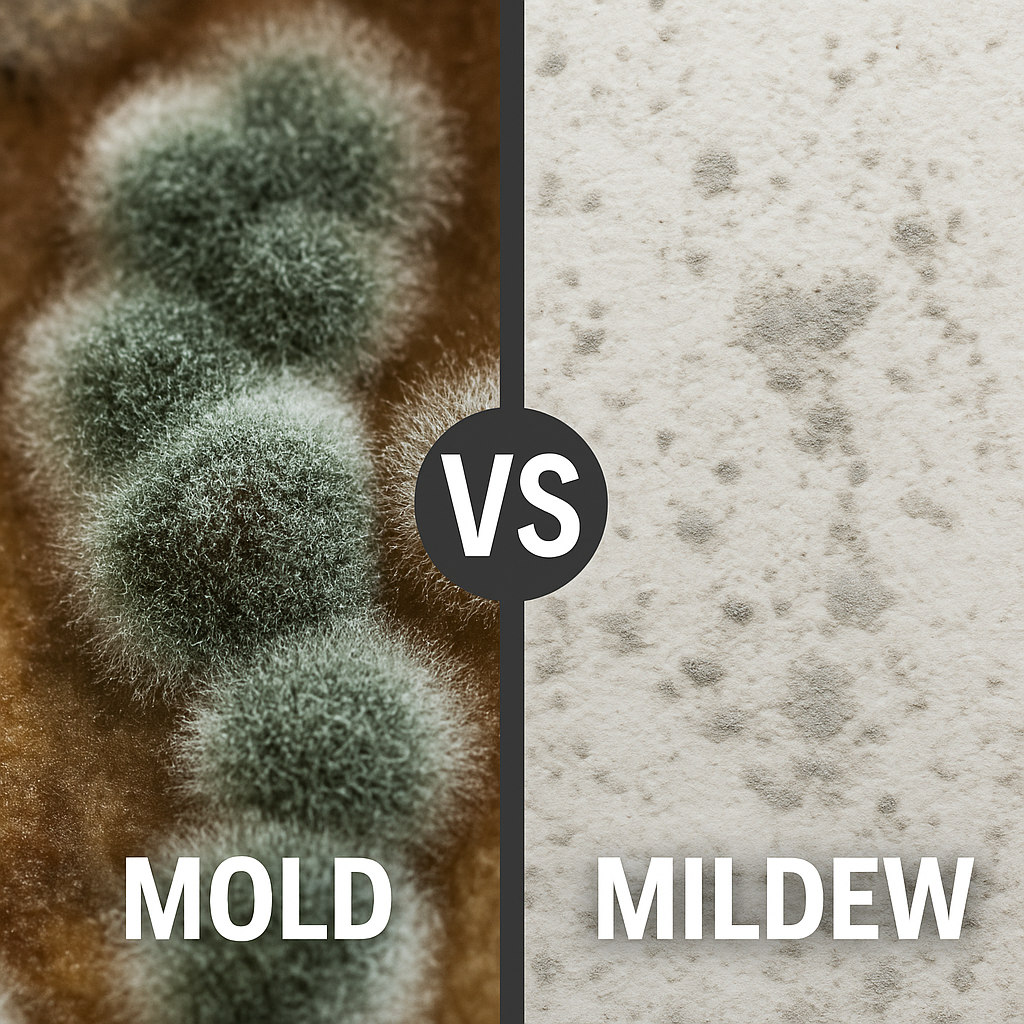
Mildew is the less aggressive cousin in the fungal family. It’s a surface-level fungus that typically appears as flat, powdery growth on damp surfaces. Think of mildew as the fungi that likes to stay on top literally.
Appearance and Location: Mildew usually shows up as white, gray, or yellow patches in its early stages. As time goes on, it can darken to brown or black. You’ll commonly find it on bathroom tiles, windowsills, shower curtains, fabrics, and other smooth, damp surfaces. It’s a surface dweller, which actually works in your favor when it comes to removal.
The Smell: Mildew produces a musty, unpleasant odor, though it’s typically less pungent than mold. Many homeowners describe it as a stale, damp smell like a basement that hasn’t been ventilated in weeks.
Health Impacts: While mildew is generally less harmful than mold, it shouldn’t be ignored. Prolonged exposure can trigger respiratory irritation, particularly in people with asthma or allergies.
You might experience coughing, sneezing, or shortness of breath. Direct contact with mildew spores can also cause skin irritation, rashes, or itchiness for those with sensitive skin. People prone to allergies may notice worsened symptoms, including runny noses, watery eyes, and throat irritation.
What Is Mold?
Mold is the troublemaker. It’s more aggressive, more dangerous, and significantly more difficult to eliminate than mildew.
Appearance and Penetration: Mold is thicker and fuzzier than mildew, presenting in a wider range of colors including black, green, blue, and even pink. Here’s where it gets serious: unlike mildew, mold doesn’t just sit on the surface it penetrates into porous materials like drywall, wood, carpeting, and insulation.
This is why mold removal often requires professional intervention. It hides behind walls, beneath flooring, and within HVAC systems where moisture accumulates.
The Smell: Mold produces a distinctly strong, musty odor that can linger throughout your home and signal a deeper moisture problem. If you’re smelling something genuinely unpleasant, mold is often the culprit.
Health Risks: The health implications of mold exposure are serious. Beyond respiratory issues and allergic reactions, certain molds like black mold (Stachybotrys) can cause neurological symptoms, unexplained fatigue, and persistent headaches.
Mold exposure can trigger severe reactions in vulnerable populations, including children, elderly individuals, and those with compromised immune systems.
Key Differences: Mold vs. Mildew at a Glance
| Characteristic | Mildew | Mold |
|---|---|---|
| Appearance | Flat, powdery | Thick, fuzzy |
| Color | White, gray, yellow, brown, black | Black, green, blue, pink |
| Location | Surface of smooth areas | Penetrates porous materials |
| Common Areas | Bathroom tiles, windowsills, fabrics | Walls, wood, carpeting, HVAC systems |
| Smell | Musty (mild) | Strong musty odor |
| Removal Difficulty | Easy to moderate | Difficult, often needs professionals |
| Health Risk | Mild to moderate | Serious |
| Structural Damage | Minimal | Significant |
How to Identify Mold and Mildew Early
Catching fungal growth early is crucial. The longer it spreads, the more damage it causes and the more expensive remediation becomes.
Look for These Warning Signs:
Start your inspection in high-moisture areas: bathrooms, kitchens, basements, and around windows. Use a flashlight to check dark corners, under sinks, and around pipes. If you notice discoloration on surfaces, feel a sticky residue, or detect that persistent musty smell, investigate further.
Mildew typically appears in concentrated spots on smooth surfaces. If you can rub it away easily with a cloth or simple vinegar solution, you’re likely dealing with mildew.
Mold, on the other hand, shows resistance to casual cleaning. If the growth returns quickly after cleaning or spreads across multiple materials, you’re dealing with mold.
Also watch for these signs: visible structural damage like soft or crumbling drywall, warping of wood, or discoloration that seems to go deeper than just the surface.
When to DIY and When to Call Professionals
Mildew: You Might Handle This Yourself
For small mildew patches (less than 10 square feet), a DIY approach often works. A mixture of vinegar, hydrogen peroxide, or a mild cleaning agent can eliminate surface mildew. Always wear gloves and ensure good ventilation. Wipe affected areas thoroughly and allow them to dry completely.
However, if the mildew keeps returning or covers a larger area, it signals an underlying moisture problem that professionals should address.
Mold: Call a Professional
When it comes to mold, especially black mold or any mold covering an area larger than 10 square feet, professional restoration services are essential. Mold remediation requires specialized equipment, containment protocols, and expertise to ensure complete removal and prevent spore spread throughout your home.
Attempting to clean mold yourself can actually make the problem worse by disturbing spores and spreading them to unaffected areas. Professional mold remediation companies like Primetime Restoration have the tools, training, and knowledge to safely eliminate mold and address the moisture source preventing recurrence.
Prevention: Stop Mold and Mildew Before They Start
An ounce of prevention is worth a pound of cure especially with fungi.
Control Moisture: The fundamental strategy is moisture control. Both mold and mildew thrive in humidity levels above 50 percent. Use dehumidifiers in damp areas, ensure your bathroom exhaust fan runs during and for 20 minutes after showers, and fix leaks immediately no exceptions.
Improve Ventilation: Proper airflow is your best friend. Open windows when weather permits, use exhaust fans in bathrooms and kitchens, and ensure your HVAC system is functioning correctly and regularly maintained.
Use Mold-Resistant Materials: When renovating or making repairs, choose mold-resistant drywall and paint. These materials are specifically designed to withstand moisture and resist fungal growth.
Regular Cleaning and Inspections: Clean high-moisture areas frequently using appropriate cleaning solutions. Inspect your HVAC system, windows, and pipes regularly for condensation and leaks. Don’t neglect areas like upholstery and carpeting mold spores can hide in fabrics and spread from room to room.
Address Water Damage Quickly: After any water event a burst pipe, roof leak, or flood begin drying the area within 24 to 48 hours. Professional water damage restoration services can ensure thorough drying and prevent mold from establishing itself.
The Hidden Costs of Ignoring Mold and Mildew
Ignoring early signs of fungal growth can lead to severe consequences. Mildew that goes untreated can spread and create ideal conditions for mold to develop. Mold that remains unchecked can cause structural damage to your home, compromising the integrity of wooden beams, drywall, and insulation.
Beyond property damage, the health impacts compound over time. Chronic mold exposure can worsen respiratory conditions and trigger or exacerbate allergies. For families with children or elderly members, the risks are even greater.
The financial impact is significant too. Early mildew removal might cost a few hundred dollars. Comprehensive mold remediation for a home with extensive infestation can easily reach thousands or tens of thousands of dollars. Add in potential structural repairs, and you’re looking at a major financial hit that could have been prevented with early action.
When to Call Primetime Restoration
If you’ve identified mold in your home, or if mildew keeps returning despite your cleaning efforts, it’s time to bring in the professionals. Primetime Restoration specializes in property damage restoration, including comprehensive mold and mildew remediation.
Our team uses advanced detection equipment to identify hidden mold, employs industry-standard containment and removal protocols, and addresses the underlying moisture issues causing growth. We don’t just remove the fungi we prevent its return.
Whether you’re dealing with a small mold concern or have experienced significant water damage followed by fungal growth, our experienced technicians will assess your situation, provide a clear remediation plan, and restore your home to a safe, healthy condition.
Frequently Asked Questions About Mold and Mildew
Q: Can I paint over mold or mildew? No. Painting over fungal growth is a temporary cosmetic fix that allows the problem to worsen beneath the surface. The fungi will continue to grow and spread, eventually compromising the structural integrity of the painted surface. Always remove mold or mildew completely before painting.
Q: How quickly does mold spread? Mold can spread rapidly under ideal conditions within 24 to 48 hours of moisture exposure. Within weeks, a small area can become a significant problem. This is why immediate action is critical.
Q: Is all black mold toxic? Not all black mold is toxic, but certain strains like Stachybotrys chartarum can produce mycotoxins that pose serious health risks. Since you can’t determine toxicity by appearance alone, any black mold should be treated as a serious concern and handled by professionals.
Q: What should I do if I find mold in my HVAC system? If mold is growing in your HVAC system, it’s spreading throughout your entire home every time the system runs. Contact a professional immediately. Your HVAC system will need to be professionally cleaned and the source of the moisture addressed to prevent recurrence.
Q: How much does professional mold removal cost? The cost varies based on the extent of the infestation, the materials affected, and your location. Minor mold removal might cost $1,000 to $3,000, while extensive infestations can exceed $10,000 or more. Early detection and professional assessment help minimize costs.
Q: Can I prevent mold and mildew entirely? While complete prevention is impossible, you can significantly reduce the risk by maintaining humidity below 50 percent, ensuring proper ventilation, fixing leaks promptly, and addressing water damage immediately. Regular inspections and maintenance are key.
Conclusion: Take Action Today
The difference between mold and mildew matters. Understanding which fungus you’re dealing with helps you respond appropriately and protect your home and health. While mildew can often be managed with careful cleaning and moisture control, mold requires professional intervention.
Don’t let fungal growth spread unchecked. If you’ve spotted suspicious growth in your home, or if you’re concerned about moisture damage after a water event, reach out to the experts at Primetime Restoration today. Our team is ready to assess your situation, answer your questions, and provide the professional restoration services your home needs.
Contact Primetime Restoration now for a free mold and mildew assessment. Let’s protect your property and your family before it’s too late.
We’re Here When You Need Us Most
When disaster strikes, time is critical. That’s why our experienced technicians are always nearby ready to respond, assess, and restore. As a locally trusted team, Prime Time Restoration is committed to protecting what matters most your home or business.
📞 Don’t wait. Call Prime Time Restoration at (210)-656-3469
🕒 Available 24/7 – Because disasters don’t wait